2010年1月6日 星期三

所謂動物權並非僅針對實驗動物, 這位大教授拿著極端行為案例來質疑尊重動物權的必要性才是本末倒置

觀念平台-人權大於動物權 2010-01-06
中國時報 潘震澤

人與其他生物的關係,可說從人類在地球現身那一刻起,就開始了。從地球歷史而言,人類出現的時間遠落在大多數生物後頭;因此,人類祖先須在天敵環伺惡劣環境下求生存。腦力發達的人類,利用雙手加上工具,在眾多生物中脫穎而出,成為地球上最成功的物種(從微生物或是昆蟲的角度來看,可能有不同的結論)。

生物在自然界的生存競爭,是真實且慘烈的:大魚吃小魚、小魚吃蝦米的弱肉強食場面,無時無刻不在上演。然而,生物除了掠食者與獵物間此消彼長的循環外,還存在各式各樣的共生關係,彼此共存共榮。以人類而言,我們不但征服、還學會利用其他生物,以充當幫手及食物來源。要是地球只剩下人類一種生物,注定也是要滅絕的。

無論從結構還是生理而言,人都屬於動物界一員。人與動物最大的不同點,不在外貌,而在文化;無論習俗傳統、還是典章制度,都是維繫群體社會所必需。此外,人還演化出同理心、公平感等道德情操,因此出現「人權」的觀念。

在生存重於一切的年代,連性命都顧不上了,遑論人權?衣食足而後知榮辱,人權的講究也是填飽肚子後的事。有人推而廣之,認為其他動物也享有相同權益,衝突因而產生。

最極端的一頭,是主張「動物權」的動物解放陣線人士。他們認為動物同人一樣,生而自由平等,不是人的附屬品,不應該當作寵物豢養,或關在動物園供人觀賞,或充當實驗室試驗品;以動物為食就更不用說了。

持這種看法的人其實是少數。二○○九年美國有份消費雜誌的讀者調查顯示(請問是那份啊?),高達九十二%的人並不贊成動物享有與人一樣的權利。事實上,多數馴化的家禽家畜及寵物,已失去自由生活的能力。動物解放陣線人士非法闖入動物養殖場或實驗室放走動物的舉動,徒然讓那些動物挨餓受凍至死,可是不負責任至極。

至於人是否能夠為了自身興趣或利益拿動物做實驗,是另一個引起爭論的問題。十九世紀以前的實驗生物學家多不認為動物具有知覺,因此對動物實驗也無罪惡感。如今已知動物也有疼痛恐懼感,因此止痛麻醉早成了標準操作,不必要的教學動物實驗已減至最少。但離體細胞實驗與電腦模擬不可能取代動物實驗,也是不爭的事實。這是生物醫學進步的必要之惡,在救人與犧牲動物的天平上,是不可能等重的。

人類從逃避動物,到捕獵動物,再到保育動物,可說是走了相當長遠的路。為了地球,也為了自身,人類必須維護生態的平衡。但物種有親疏遠近之別,我們愛護動物,也不應過頭;若把動物看得比人還重,甚至以物害人,可謂本末倒置。(作者為生理學教授,科普作家)

2010年1月5日 星期二

肺魚的生物學與演化專刊

這是Journal of Morphology於1986年發行的專刊, 但是一直到2005年才有線上版[網址]. 內容如下:
  • An historical overview of the literature of dipnoi: Introduction to the bibliography of lungfishes
  • A list of fossil and extant dipnoans
  • Characterization of the dipnoi, a monophyletic group
  • Dipnoans as sarcopterygians
  • Relationships of lungfishes
  • Paleozoic lungfishes - a review
  • Morphology and evolution of the dermal skeleton in lungfishes
  • Lungfish: Phylogeny and parsimony
  • The natural history of African lungfishes
  • The biology of the australian lungfish, Neoceratodus forsteri (Krefft 1870)
  • Urogenital morphology of dipnoans, with comparisons to other fishes and to amphibians
  • Circulation and respiration in lungfishes (Dipnoi)
  • Estivation in Protopterus
  • Feeding systems of living dipnoi: Anatomy and function
  • Lungfish neural characters and their bearing on sarcopterygian phylogeny
  • The biology of lungfishes: An epilogue
  • Bibliography of lungfishes, 1811-1985

2010-01-05新進動物

祖先的大北鼻 x 1
Uromastyx aegyptius 埃及王者蜥 x 2

[再說]

青銅鼠與其它鼠魚的"黃銹病"(或絲絨病)由卵圓鞭毛蟲所引起

文獻來源: Ferraz E, Sommerville C. 1998. Pathology of Piscinoodinium spp. (Protozoa: Dinoflagellida), parasites of the ornamental freshwater catfishes Corydoras spp. and Brochis splendens (Pisces: Callichthyidae). Diseases of Aquatic Organisms 33: 43-49. [全文下載]

Abstract
Piscinoodinium (Protozoa, Dinoflagellida) was commonly found on routine smears of samples of Brochis splendens and Corydoras spp imported into Britain from South America, and on samples of the same gioup of ilsh examined at the evporters holding facilities in Brazil Infected fish had trophonts of difielent sizes on the gills and skin In histological sections of the skin, the trophonts were found to be attached within depiessions of diffelent depths or enclosed by hyperplastic epithelial cells Such enclosed trophonts have not previously been reported Since some of the enclosed trophonts were dead, it was lhought that enclosure was a result of the deep penetration of the trophont and the host defence mechamsm. On the gills the Piscinoodinium infection was colnmonly associated with epithclial hypertrophy, focal and diffuse hyperplasia, oedema of the respiratory epitheliuma nd lamellar fusion The presence of this protozoan on different specles of fish from the same shipment suggests that the infection was acquired befoie export The souice of infection and the stages of the export process which expose the fish to the highest nsk of infection are discussed.

2010年1月4日 星期一

行政院農委會家畜衛生試驗所水生動物疾病診斷輔助系統

感覺很有用的資料庫, 網址在此http://aqua.nvri.gov.tw/

巴西產Oligoxystre屬食鳥蛛之一新種 - Oligoxystre diamantinensis

文獻來源: Bertani R, dos Santos T, Righi A. 2009. A new species of Oligoxystre Vellard 1924 (Araneae, Theraphosidae) from Brazil. Zookeys 5(2009) doi: 10.3897/zookeys.5.83

Abstract
A new species of Oligoxystre, Oligoxystre diamantinensis n. sp., is described from Brazil. Male can be distinguished from all other Oligoxystre species by the male palpal bulb lacking a small subapical keel on the embolus in conjunction with the embolus length (less than 2.5 times the tegulum length) and by the tibial spur being inserted in a perpendicular angle in relation to the tibia axis. Female can be distinguished by the spermathecae being much more longer than wide, lacking lateral lobes and having a large terminal lobe with five smaller lobes around it. Additionally, males and females can be distinguished by the general blue metallic color pattern contrasting with the reddish setae on the abdomen. A key for all described Oligoxystre species is presented.

褶痕擬相手蟹種群的分類檢討

文獻來源: Rahayu DL, Ng PKL. 2010. Revision of the Parasesarma plicatum (Latreille, 1803) species-group (Crustacea: Decapoda: Brachyura: Sesarmidae). Zootaxa 2327: 1-22. [link]

Abstract
The mangrove sesarmid crabs of the Parasesarma plicatum species-group are revised, and four distinct taxa are recognized: Parasesarma plicatum (Latreille, 1803), P. affine (De Haan, 1837), P. ungulatum (H. Milne Edwards, 1853), and P. dumacense (Rathbun, 1914). These four species are easily distinguished from congeners by the number of dactylar tubercles of the chelipeds, the shape of the male first gonopod and live coloration. Their distributions are also distinct, P. plicatum being found in the eastern Indian Ocean, P. affine in Japan, China, Taiwan, P. ungulatum throughout Southeast Asia, and P. dumacense in the Philippines.

本blog有fb了

本blog也有facebook粉絲網頁了, 請至http://www.facebook.com/pages/Care-of-Magical-Creatures/233680374671加入 [限台灣, 中國, 香港, 新加坡等華語區朋友加入]

厄瓜多南方產新物種紅喉拉美蜥(Enyalioides rubrigularis)及該國同屬物種之檢索

[superlink: Images from Zookeys via Wikimedia Commons; photo credit: Omar Torres-Carvajal]
文獻來源: Torres-Carvajal O, de Queiroz K, Etheridge R (2009) A new species of iguanid lizard (Hoplocercinae, Enyalioides) from southern Ecuador with a key to eastern Ecuadorian Enyalioides. ZooKeys 27: 59–71. doi:10.3897/zookeys.27.273

Abstract
We describe a new species of Enyalioides from mid-elevation rainforests in southeastern Ecuador. This represents the fifth species of Enyalioides known to occur east of the Andes in South America; the other four species are E. cofanorum, E. laticeps, E. microlepis and E. praestabilis. Among other characters, the new species can be distinguished from other Enyalioides by having distinct caudal whorls, fewer than 32 longitudinal rows of dorsals at midbody, and bright orange to red gular scales bordered with black in adult males. Morphological similarity suggests that the new species, which we call E. rubrigularis, is closely related to E. praestabilis.

根據近5000筆文獻與標本資訊繪製阿曼與阿拉伯聯合大公國爬行類動物之分布圖以利保育政策與研究進展

[superlink: Images from ZooKeys via Wikimedia Commons; photo credit: AS Gardner]
文獻來源: Gardner AS. 2009. Mapping the terrestrial reptile distributions in Oman and the United Arab Emirates. ZooKeys 31(2009): doi: 10.3897/zookeys.31.133

Abstract
The terrestrial reptile fauna of Oman and the United Arab Emirates is rich, with at least 79 species of lizards and snakes and a single species of worm lizard. However, to date there have been no accurate maps published of their distribution ranges, and distribution data relies on scattered museum specimen localities and published accounts. Considerable numbers of locality data points do exist, collected by visting and resident herpetologists, and more recently, from ecologists working on surveys for environmental impact assessments and biodiversity action plans. These data are invaluable, as amongst other uses, they can assist conservation planning and management, and will eventually document changes in distributions over time. This is especially true where there has been extensive habitat loss and degradation due to urbanisation and development activities. Data have been collected from museum records, published accounts and unpublished data from a variety of sources, including many records made by the author over the last 20 years, with the aim of producing an atlas of species distributions. The number of records is now approaching 5.000, giving sufficient coverage to produce maps that are useful for a variety of applications. Examples are discussed, including endangered and endemic species, snakes of medical importance and species of potential interest in ecological and evolutionary studies.

美索不達尼亞沙漠珍珠鱂 - 一種產於伊朗與伊拉克的齒鯉新種

文獻來源: Coad BW. 2009. A new species of tooth-carp, Aphanius mesopotamicus, from Iran and Iraq (Actinopterygii, Cyprinodontidae). ZooKeys 31(2009) doi: 10.3897/zookeys.31.131

Abstract
A new species of tooth-carp, Aphanius mesopotamicus (Cyprinodontidae), is described from southern Mesopotamia in Iran and Iraq. It is distinguished from related species by pigmentation (males have clear margins to the unpaired fins, no bars on the caudal fin and 10–15 clearly defined flank bars; females bear irregular blotches or spots on the flank), distribution, and a suite of morphometric and meristic characters in multivariate space (pectoral fin rays, caudal peduncle length, scales to pelvic fin and postorbital length in males and pectoral fin rays, scales to dorsal fin, predorsal length and total scales in females). The description is based on museum specimens and there have been no recent collections of the new taxon.

此新種之圖片請見Wikipedia中ZooKeys期刊中所收納新物種之圖片集

2010年1月3日 星期日

東南亞野生淡水魚因觀賞魚貿易而被過度捕撈, 如銀鯊等魚已呈現區域性絕滅

[superlink: wikipedia, photo credit: lerdsuwa]
Ng PKL, Tan HH. 2004. Freshwater fishes of Southeast Asia: potential for the aquarium fish trade and conservation issues. Aquarium Sciences and Conservation 1(2): 79-90. [全文網址]

Abstract
Southeast Asia is an area rich in biodiversity, with a high degree ofendemism in both flora and fauna. Many freshwater fish specieshave been exploited for the ornamental fish trade. As thepopulation in South East Asia increases, vast tracts of forestsare cleared for agricultural, industrial and urbanizationpurposes. To conserve and sustainably exploit the wild fishpopulation, measures should be adopted to protect this naturalresource. Already, several ornamental species have been severelyoverexploited, e.g. bala shark (Balantiocheilos melanopterus),pygmy loach (Botia sidthimunki) and arowana (Scleropagesformosus), but the extirpation of local populations occurs formany reasons, including deforestation, and not just because offishing for the trade. There are also still many species thathave great ornamental fish potential. Wild fish species have alsobeen successfully bred in captivity and conserved, e.g. tigerbarb (Puntius tetrazona), bala shark, pygmy loach and arowana.Other methods of conservation include public education, leavingpristine forests intact and reforestation. The aquarium trade ofthe bala shark, harlequin rasbora (Rasbora heteromorpha), clownloach (Botia macracanthus), arowana and sawfish (Pristismicrodon) is discussed

能源之戰 20隻沙漠烏龜與加州爭地

[superlink: wikipedia, photo credit: Tigerhawkvok]
能源之戰 20隻沙漠烏龜與加州爭地【聯合報╱編譯王麗娟/報導】
2010.01.03 03:48 am

雖然牠們只有廿來隻,但因是稀有的沙漠烏龜(應該是加州地鼠陸龜Gopherus agassizii),所以還是在加州莫哈維沙漠上引發一場地盤爭奪戰。而且這場生物保育與潔淨能源的戰爭,愈演愈烈。

兩年以來,美國「亮源能源」(BrightSource Energy)公司一再向政府申請,希望能在莫沙維沙漠一塊土地上架設四十萬面鏡子,收集陽光能源。這是利用美國土地管理局所屬土地追求潔靜能源的第一個類似計畫,若是合作順利,未來整個西部的公有土地將有類似的計畫跟進。

然而這項追求潔淨能源的計畫必須付出代價。根據政府科學家所作結論,其中有十五平方公里土地為瀕危物種沙漠烏龜的棲息地。

山岳協會與環保人士並不反對追求潔淨能源,但是希望太陽能廠能換個地點,為一些罕見的野生生物保留一個接近原始狀態的家。此地的罕見生物包括沙漠烏龜、穴居鴞、沙漠大角山羊。

預料加州與聯邦當局數月後才會對沙漠烏龜的命運作成決定。但是「亮源能源」上月警告政府,若是政府干預太多,太陽能計畫只有作罷。在政府全力推動綠能的此刻,專家預測,政府的任何決定都會引起極大的反應。

專家預期,隨著發展太陽能、風能、地熱發電廠的計畫增加,尤其是加州計畫於二○二○年讓全州三分之一電力來自再生能源,類似的土地之爭未來數年還會陸續出現。

【2010/01/03 聯合報】

另請參考華盛頓郵報的報導與圖片

回顧10年來歐盟, 中國, 台灣與日本對於東南亞CITES列管物種之消耗發現共有至少1700萬隻爬蟲被輸出, 其中包含52萬隻的馬來箱龜, 810萬隻巨蜥及120萬隻的蟒蛇

[superlink: TAFFIC, photo by Sabine Schoppe]
文獻來源: Nijman V. 2009. An overview of international wildlife trade from Southeast Asia. Biodiversity and Conservation DOI: 10.1007/s10531-009-9758-4

Abstract
Wildlife trade is the very heart of biodiversity conservation and sustainable development providing an income for some of the least economically affluent people and it generates considerable revenue nationally. In Asia the unsustainable trade in wildlife has been identified as one of the main conservation challenges. Internationally, wildlife trade is regulated through the Convention on International Trade in Endangered Species of wild fauna and flora (CITES) to which all Southeast Asian nations are signatory. I obtained data on international trade in CITES-listed animals in the period 1998–2007. In all >35 million animals (0.3 million butterflies; 16.0 million seahorses; 0.1 million other fish; 17.4 million reptiles; 0.4 million mammals; 1.0 million birds) were exported in this period, 30 million (~300 species) of them being wild-caught. In addition 18 million pieces and 2 million kg of live corals were exported. Malaysia, Vietnam, Indonesia and China are the major exporters of wild-caught animals and the European Union and Japan are the most significant importers. Over this period exports in birds significantly decreased, trade in the other taxa either increased or remained stable. For all taxa but butterflies the vast majority of individuals represent wild-caught individuals. Records of illegal or undeclared international trade are scant but can be significantly larger than levels of official exports. It is concluded that there is an urgent need for better assessments of what levels of exploitation are sustainable (including exploring appropriate proxies for Non Detriment Findings), for initiatives to make regulatory mechanisms more effective (including the introduction of minimum mandatory standards and monitoring selected wildlife trade hubs), and for better licensing and registration. Funding for at least some of these initiatives can be obtained by imposing small levies on exports of CITES-listed wildlife.

另可參考TRAFFIC對這篇論文的報導

我覺得特生中心已經變成消防隊了

罕見白鱔魚 新園落網【聯合報╱記者陳崑福/萬丹報導】
2010.01.03 04:04 am

屏東縣萬丹鄉民李清瑞,日前在屏東縣新園鄉田洋村的大排水溝渠,抓到一尾白色鱔魚,與一般鱔魚長得土褐色不同,相當少見,吸引民眾圍觀。

萬丹鄉民黃金謀飼養青蛙等物十多年。他說,先前養過青蛙,也養過從蝌蚪開始就是白色,長大變成白色青蛙情形,送往農委會特生物研究中心研究,確定是基因突變,這尾白色鱔魚,應該也是基因突變的結果。(這個記者是出了什麼事啊?)

根據他的養殖經驗,青蛙突變後,行動力比較弱,對外界反應比較遲鈍,這尾鱔魚也具有相同情況,比一般鱔魚容易抓。

李清瑞在高屏溪、新園地區大溝渠抓魚已十多年,第一次抓到白色鱔魚,這尾鱔魚長度超過40公分,他判斷壽命應該超過4年。

李清瑞表示,一般土鱔,顏色是土褐色,並有黑色斑點,這尾鱔魚全身是白色,頭部長出疑似耳朵形狀,相當可愛,他不忍心宰殺,養在塑膠桶,鱔魚以蚯蚓為主食,大的鱔魚也會吃小的鱔魚。鄉長郭寶聯也來看過,感到很神奇。

【2010/01/03 聯合報】

2010年1月2日 星期六

廟委交接 白蛇娘娘這邊請

廟委交接 白蛇娘娘這邊請【聯合報╱記者范振和/花蓮報導】
2010.01.02 04:18 am

花蓮市福安廟昨天舉行管理委員會主委暨委員、監察委員交接就職典禮,在進行廟產交接時,也一併接下該廟「鎮殿之寶」白蛇娘娘,讓所有參觀交接典禮的人看傻了眼。

福安廟執事人員談起白蛇娘娘說,8年前的農曆5月初3,消防隊據報,民宅有蛇出沒,隊員前往逮個正著,小白蛇不斷吐信,看來凶狠;但說也奇怪,放在土地公神像前,就乖巧多了,於是隊員送給廟方飼養至今。

一般常見的白蛇體稍黃、紅眼睛,而這條錦蛇是在花蓮市福安廟附近的民宅捕獲,純白色、黑眼睛。當初抓到時,有人開價200萬元,廟方不願割愛,兩天內即發現廟門被撬開,什麼都東西都沒失竊,研判是為了偷蛇而來。當初這條白蛇只有一般筷子粗大、20公分長,如今體長160公分左右。

主委羅太需指出,白蛇從何而來不清楚,倒是白蛇引來不少外地信徒一窺究竟,白蛇早期都吃老鼠,如今都吃生豬肉,生性溫馴;多年來擺放主委辦公廳透明櫃中,旁立木雕財神爺為伴。

白蛇一年脫皮4次,不少信徒都會搶著索取蛇皮,充作成避邪皮帶,成了鎮殿之寶,而白娘娘也頗有靈性,除了端午佳節,廟方會提供亮相作秀外,平日重大節慶也會現身。

昨天是福安廟主委暨委員、監察委員交接就職典禮,羅太需順利連任,從總務組長簡安定手中接下印信後,也一併接下白蛇等廟產。觀禮人士驚呼,「全台宮寺廟壇辦理的交接典禮,從來沒看過連蛇都交接」,實在特殊。

此次福安廟新任副主委是陳進益、江福榮,委員是謝文開、林聰龍、周仁瑞、陳永和、陳馨佩、李文宗、何君冶,常務監察戴豐富、監察委員李坤泉及吳耀欽。

【2010/01/02 聯合報】

2010-01-02新進魚隻

Corydoras sp. C155 [superlink: DATZ, photo credit: A. Werner]
Hemigrammus hyanuary x 金線金尾燈 (=一月燈) (Costello Tetra, キャッスルテトラ) x 10 (不是報價單上的螢火蟲燈)
Bathyaethiops breuseghemi 紅背月球燈 x 10
Corydoras venezuelanus 委內瑞拉青鼠 x 6
Corydoras sp. "vittatus Manaus" (="vittatus Rio Branco", =C155) 瑪瑙斯灰甲鼠 (=巴那可灰甲鼠, 條紋型灰甲鼠) x 5
Nandus nandus 印度枯葉虎 x 5

在台灣市面上會出現的"枯葉魚/枯葉虎"系列魚種並不多. 常見的頂多就是南美洲的枯葉魚(Monocirrhus polyacanthus)和東南亞的枯葉虎(Nandus nebulosus). 這群魚在水族市場上不是主流的魚種, 連在多數的觀賞魚圖鑑中都被丟進"others". 不過這群枯葉狀的鱸形目魚類的分類歷史事實上相當複雜的. 曾經有一段時間, 這些所謂的"枯葉魚", 不管是亞洲的南鱸(Nandus), 鋸鱗鱸(Pristolepis), 南美的葉鱸(Polycentrus), 枯葉魚(Monocirrhus), 非洲的非洲南鱸(Afronandus)[pdf]以及非洲多棘鱸(Polycentropsis), 與變色龍(Badis, Dario)都被丟進南鱸科(Nandidae)中. 而且因為這種非洲, 南美與亞洲的不連續分布, 南鱸科還曾經被誤以為是一個岡瓦納大陸分布型的生物類群. 不過Kullander & Britz (2002)的文章提出一個看法, 南亞與東南亞產的枯葉虎, 也就是南鱸, 是變色鱸科(Badidae)的姐妹群, 而鋸鱗鱸, 葉鱸, 枯葉魚, 非洲南鱸與非洲多棘鱸都應該被劃入多棘鱸科(Polycentridae). 在此之後這樣的看法被Rüber et al.(2004)以及Rüber et al.(2006)的研究所遵循.

這次進口的"印度枯葉虎"在過去曾有少量的輸入記錄. 不過在查閱資料的時候發現Nands nandus這個學名似乎會被誤用在其它物種. 以日本網頁AllAbout或youtube上的影片來說, 其所顯示的Nandus nandus看起來似乎是錯的, 然而水族市場上所流通的另一個物種都被鑑定為Nandus nebulosus. 但這真的是正確的嗎? Nandus nandusHamilton於1822年根據印度恆河流域產標本所描述, 而nebulosus則由Gray於1835年也根據可能來自印度的標本所描述(但未有任何模式標本被確認). 但是為什麼水族市場上那些可能來自馬來半島或印尼的"枯葉虎"都被熱帶魚圖鑑標記為Nandus nebulosus呢? 現生的南鱸其實還有好幾個物種, 例如: Nandus andrewi Ng & Jaafer, 2008 (West Bengal, India), Nandus mercatus Ng, 2008 (Sumatra, Indonesia), Nandus oxyrhynchus Ng, Vidthayanon & Ng, 1996 (Sisaket Province, Thailand)以及Nandus prolixus Chakrabarty, Oldfield & Ng, 2006 (Sandakan, Borneo) (各種的分布請見我的google map). 那麼台灣市面上的枯葉虎又是那一種呢? 經過徵詢新加坡國立大學Ng Heok Hee博士的意見以後, 他認為真正的nebulosus應該是分布於馬來半島與婆羅洲(東北部除外)的地區, 而水族市場上應該也只有nandusnebulosus兩個種. 某些網路資訊說這隻印度枯葉虎是"汽水魚"(也就是河口魚的意思), 但沒有證據顯示這條魚只分布在河口, 只能說應該是一條廣鹽性的淡水魚. 雖然看起來像條大魚, 不過記錄上的體長都在10cm左右. 飼養上與一般的枯葉虎沒有什麼兩樣. 非常安靜好養, 而且有可能接受飼料.

今天另一個議題是再談所謂的灰甲鼠. 我們在2009/10/242009/11/01的文章中已經說過, 無論巴西的不管那一個港埠以blochivittatus名義輸出的魚都不是真正的blochivittatus. 而市面上很常見的瑪瑙斯灰甲鼠(=條紋型灰甲鼠, 巴那可灰甲鼠)早在2007年即由德國水族雜誌DATZ給了一個新的C-number, C155. 只是這個訊息似乎沒有廣泛在亞洲傳播. C155的產地被德國水族界認為在Purus河流域, 而Rio Branco則是最近的一個地點. 但由於這些魚都可能由瑪瑙斯出口, 因此這就是為什麼有些魚會以"vittatus Manaus"的名義出口. 但值得注意的是, 德國鯰魚論壇l-Welse所顯示的C155與DATZ所定義的C155是完全不同的魚(l-Welse所顯示的魚同等於日本人所說的"blochi Manaus"), 因此在名稱的使用上最好是以DATZ的編號為基準.

魚隻來源: 華洋水族

2010年1月1日 星期五

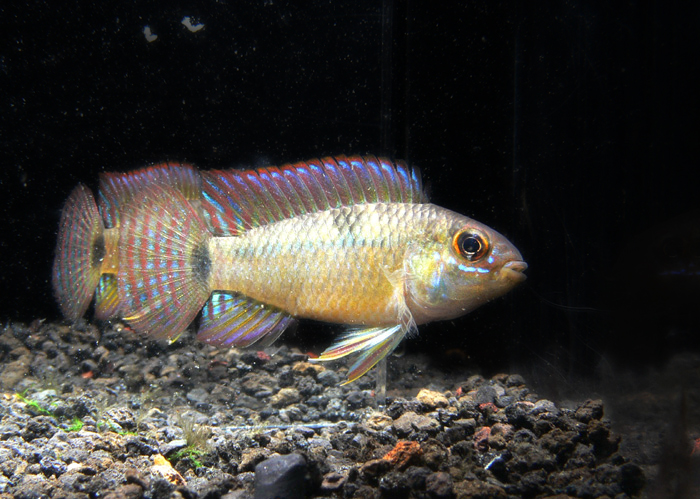
二點短鯛可在數秒內變色並以6種體色呈現7種行為使牠們在清澈水域中以最節能的方式溝通

文獻來源: Rodrigues RR, Carvalho LN, Zuanon J, Del-Claro K. 2009. Color changing and behavioral context in the Amazonian Dwarf Cichlid Apistogramma hippolytae (Perciformes). Neotropical Ichthyology 7(4): 641-646. [全文下載]

Abstract
Animal coloration has many functions, and fishes are noted among vertebrates for presenting a wide variety of color patterns. Although in marine fishes the relationship between body coloration and behavioral context is well documented, there’s not much information about freshwater fishes. Here we describe color patterns displayed by the dwarf cichlid Apistogramma hippolytae and suggest that these patterns are dependent on different social and behavioral settings. Field observations were conducted underwater in a pond in Central Amazonia, Brazil. We recorded six body coloration patterns related to seven different kinds of behavioral activities: foraging, resting, reproductive and agonistic displays, aggression (attacking and fleeing) and parental care. Changes in coloration occur rapidly and take only a few seconds. Females on parental care exhibited a unique pattern that are more persistent and probably manifests more slowly. In the shallow and clear waters of the natural environment of this dwarf cichlid, color communication seems to constitute an efficient way to display information about individual mood, social status and reproductive readiness, contributing to minimize loss of energy in unnecessary interactions.

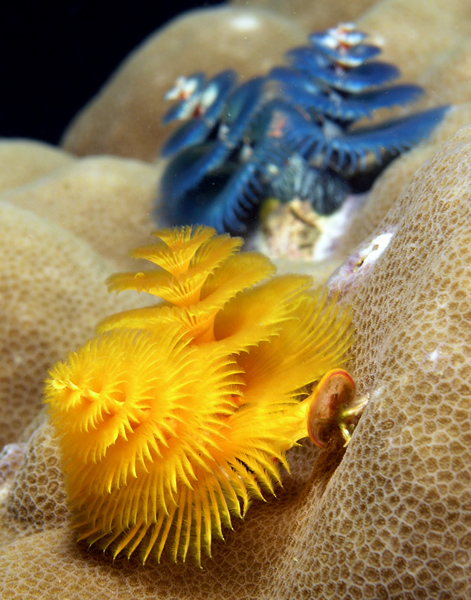
寵物貿易對珊瑚礁無脊椎動物的需索無度使得相關物種與生態系漸漸步向崩潰

[superlink: wikipedia, photo credit: Nick Hobgood]
文獻來源: Rhyne A, Rotjan R, Bruckner A, Tlusty M (2009) Crawling to Collapse: Ecologically Unsound Ornamental Invertebrate Fisheries. PLoS ONE 4(12): e8413. doi:10.1371/journal.pone.0008413

Abstract
Background
Fishery management has historically been an inexact and reactionary discipline, often taking action only after a critical stock suffers overfishing or collapse. The invertebrate ornamental fishery in the State of Florida, with increasing catches over a more diverse array of species, is poised for collapse. Current management is static and the lack of an adaptive strategy will not allow for adequate responses associated with managing this multi-species fishery. The last decade has seen aquarium hobbyists shift their display preference from fish-only tanks to miniature reef ecosystems that include many invertebrate species, creating increased demand without proper oversight. The once small ornamental fishery has become an invertebrate-dominated major industry supplying five continents.

Methodology/Principal Findings
Here, we analyzed the Florida Marine Life Fishery (FLML) landing data from 1994 to 2007 for all invertebrate species. The data were organized to reflect both ecosystem purpose (in the wild) and ecosystem services (commodities) for each reported species to address the following question: Are ornamental invertebrates being exploited for their fundamental ecosystem services and economic value at the expense of reef resilience? We found that 9 million individuals were collected in 2007, 6 million of which were grazers.

Conclusions/Significance
The number of grazers now exceeds, by two-fold, the number of specimens collected for curio and ornamental purposes altogether, representing a major categorical shift. In general, landings have increased 10-fold since 1994, though the number of licenses has been dramatically reduced. Thus, despite current management strategies, the FLML Fishery appears to be crawling to collapse.

2010-01-01新進動物

[superlink: my google map]
Varanus sp. cf. timorensis "Kisar Island" 金點帝汶巨蜥
Varanus cumingi (=Varanus salvator cumingi) 金頭澤巨蜥

首先談金頭澤巨蜥. 這隻巨蜥雖然不是菲律賓產澤巨蜥複合群中最稀少的物種, 然而這個物種仍然深受棲地破壞, 以及皮革貿易所帶來的獵捕壓力. Koch等人在2008年的時候撰文將金頭澤巨蜥(以及其它菲律賓產澤巨蜥)皆提升為種[見此說明], 當時我們認為這樣的動物命名作為令人有相當大的疑慮, 因為Koch僅根據一些形態測量值便將金頭澤巨蜥與"一般的澤巨蜥"[註一]分開, 但是那樣的研究方法並無法證實菲律賓產的數種澤巨蜥與中南半島至印尼爪哇(也就是巽它大陸地區)的澤巨蜥在演化上早就分道揚鑣. 我們後來取得一些樣本, 再配合GenBank上已經被上載的序列, 做了簡單的分析, 我們發現金頭澤巨蜥的確可能與salvator是完全不同的物種. 而我們也意外地在這個簡單分析中發現在台灣流通的"黑澤巨蜥"其實很可能有多數只是中南半島產澤巨蜥的黑化型, 過去稱為"komaini", 而不是蘇拉維西產的togianus. 根據Wicker et al. (1999)發表於Mertensiella這個期刊的文章Contributions to the biology, keeping and breeding of the Mindanao water monitor (Varanus s. cumingi)指出, 在法蘭克福動物園中被圈養的野生金頭澤巨蜥的腸道寄生蟲包含了六鞭毛蟲( Hexamitae), 蛔蟲(Ascaridae), 圓線蟲(Strongylinda), 及絛蟲(Cestodae).

那個金點帝汶巨蜥是怎麼一回事? 根據巨蜥研究學者Böhme發表在2003年的觀點, 在Odatria這個亞屬中, 有兩個主要的演化支系, 其中一個特產於澳洲, 也就是刺尾巨蜥(V. acanthurus)種群, 包含了史東巨蜥(V. storri)等等在台灣的寵物市場幾乎見不到的物種. 另一個就是帝汶巨蜥(V. timorensis)種群, 包含了帝汶巨蜥, 孔雀巨蜥(V. auffenbergi), 星點巨蜥(V. similis)等物種. 不過數篇巨蜥演化的研究(例如Schulte II et al, 2003)都指出這兩個種群都不是單系群, 所謂的帝汶巨蜥種群事實上應該還要包含scalaris, semiremex, mitchelli, tristis, glauerti, pibarebsis, 以及glebopalma這些物種. 帝汶巨蜥的分類歷史相當混亂, 在過去曾經與澳洲產的梯紋巨蜥(V. scalaris)以及星點巨蜥(V. similis)混淆不清, 不過根據分子親緣關係的證據顯示與帝汶巨蜥關係最近的根本不是梯紋或星點, 反而是澳洲的銹色巨蜥(V. semiremex)及米契爾巨蜥(V. mitchelli). 除了以上提到的物種外, 帝汶巨蜥本身的分類糾葛還牽涉了孔雀巨蜥以及產在Kisar島(Pulau Kisar)的金點帝汶巨蜥. 孔雀巨蜥雖然在1999年才被發表, 但是在發表當時除了體色斑紋之外, 一般巨蜥學者認為並沒有足夠的證據顯示其與帝汶巨蜥是完全不同的物種. 至於金點帝汶巨蜥則是近年的另一個發現, 它在寵物市場上的俗名極多, Timor Monitor Lizard Kisar Island, Leopard "timorensis", "kisarensis"(一個偽學名), 或是Varanus (Odatria) timorensis - Varietät von Pulau Kisar(IG Warane的表示法). Kisar位於帝汶島的東北方, 其與帝汶島的直線距離其實並不遠, 如果說這個島上的帝汶巨蜥只是因為身上的斑點是金色的被當成不同的分類群, 那麼有沒有可能類似琉磺澤巨蜥與澤巨蜥的關係一樣? 也就是說那種體色只是因為在分布邊緣的小族群由母族群向外播遷的過程中發生了基因漂變還是啥的, 使牠們看起來有不同的體色呢? 從google earth上看Kisar這個島, 幾乎沒有森林覆蓋, 算是相當乾燥的一個小島, 這是因為人為墾殖的結果? 還是這個島本來就是一個平坦且乾燥的島嶼呢? 根據國外論壇的一些飼養報告, 這個金點帝汶巨蜥似乎能夠適應相當多樣化的飼養環境, 但是一般的建議還是以半乾燥與半樹棲的環境來飼養這個物種. 雖然在人工條件下提供的食物不外乎昆蟲或乳鼠, 但根據Losos & Greene (1988)的文章指出, 帝汶巨蜥的胃內含物包含了盲蛇以及蠍子.

[註一] 根據Koch的觀點, 一般在寵物市場上流通的澤巨蜥都不是原名亞種salvator salvator, 而應該是salvator bivittatus或是salvator macromaculatus.