2009年5月9日 星期六

2009-05-09新進魚隻

Channa ornatipinnis 幻彩藍寶石雷龍 x 1 (不是幻彩紅寶石喔)
Corydoras sp. CWS83 噴點英哥鼠 x 1
Corydoras sp. CWS77 (?) x 2 (以白翅豹鼠名義販賣)
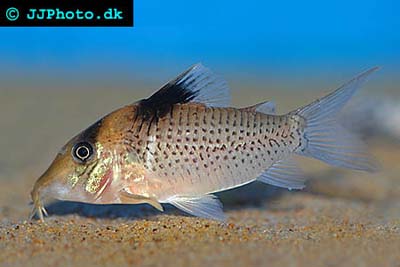
Corydoras sp. C90 哥倫比亞煙圈鼠(黑斑比較大的型) x 1
Corydoras sp. cf. 類似highfin與yuuna的不知道啥碗糕 x 1
Cobitis sp. 屏東花鰍 x 2
Puntius semifasciolatus 條紋小鲃 x 6
Gobiobotia intermedia 中間鰍鮀 x 1
Hampala macrolepidota 裂峽鲃 x 1 (混在"一間不知道什麼碗糕"裏) (aqua-bonito的照片)

今天的主題叫做 - "再那個的水族館都還是要進去逛一逛". 今天在一家很"那個"(註一)的水族館中找到一些怪咖. 首先是那些台灣南部溪流的魚. 我當然知道台灣的美麗原生蝦虎自從某套書上市以後, 就開始有特別的管道進入盤商成為觀賞魚. 嗯, 在台灣南部與東部有限的溪流環境中撈捕數量並不多的某些降海性蝦虎當成觀賞魚出售是不是件值得讚賞的事有機會再談啦. 不過, 我們沒想到中間鰍鮀也買得到喔? 其實這個中間鰍鮀是混在高身小鰾鮈(Microphysoobio alticorpus)(亦俗稱車栓仔)中以"黑間跳鱸"的名義販賣, 一隻20元. 所以, 台灣南部的野生魚採集業真的很蓬勃了嗎? 觀賞魚市場真的對台灣的野生魚(與淡水蝦)很有興趣嗎? 5月份的日本Aqua-Life雜誌也介紹了好幾種輸出到日本的台灣淡水蝦, 其實我不是很確定這應該要高興? (台灣產品受到台灣人潛意識中總是先進的日本人的青睞?) 還是憂慮? (除了溪流污染, 海岸污染, 毒魚電魚, 現在溪流魚類蝦類多了一個被捕捉的理由?) 如果資源的利用有可能促進棲地的保育與環境教育, 那麼我就會對野生魚的採撈持還算正面的態度, 但如果這些野生魚, 尤其是降海性蝦虎, 爬鰍科, 還有海龍的捕撈純粹只是因為某些採集達人因為通曉那些少數的產地所造成的自然資源壟斷與損耗, 那麼販賣, 購買與飼養這些漂亮的台灣原生魚類就會令我有非常大的疑慮 (更何況有不少的假專業水族館的專業水平令人擔心).

至於那隻什麼不知道啥碗糕的老鼠, 應該是混在一條被阿勇水族稱為"阿瑪帕馬鞍鼠", 然後被華洋水族稱為"黑頭豹鼠" (參看日本網頁)的老鼠中. 背鰭非常地高, 胸鰭也很長, 但吻部是一般的短吻型, 如果產地真的是Amapa州, 那麼我就想不太出來牠有可能是什麼鼠. 另外, 買到一條"幻彩藍寶石雷龍"是一個小驚喜. 看起來是3月底台族貿易所引進的幻彩紅寶石雷龍(Channa pulchra)中所混到的一條魚.

註一: 什麼叫很"那個", 某家水族館把橙點石龍子養在一個20cm見方的小玻璃缸, 下面放樹皮後面又貼無意義的背景板, 石龍子瘦得離譜在那邊很不安地爬來爬去, 這樣的水族館實在是太不專業太糟糕了.

魚隻來源: 北高雄水族(鳳山店), 永信水族(文衡店), 永豐魚水族
圖片連結: aqua-bonito

白蚓蜥是什麼碗糕?

前兩天進口了三隻白蚓蜥(Amphisbaena alba), 那...倒底是什麼東西啊? 其實蚓蜥並非首次引入台灣, 過去就曾經有非常少量的黑白蚓蜥(Amphisbaena fuliginosa)引入的記錄. 所以問題來了, 蚓蜥是什麼東西? 吃什麼? 怎麼養? 有什麼樣的疾病呢? 在整個有鱗類(Squamata)中, 除了蛇以外的成員的身體延長與四肢退化在演化上曾獨立發生了好幾次. 有些四肢的退化與快速移動能力有關(如環尾蜥科的Chamaesaura, 圖片見此), 有些則與土棲或穴居行為有關. 整個有鱗類中肢體退化與身體延長這樣的演化事件發生頻率最高的類群則是(蛇蜥科+(石龍子科+雙足蜥科))的姐妹群, 也就是"蚓蜥亞目"(Amphisbaenia)(中文版本). 這個目包含了好幾個科, 而這次進口的物種則是蚓蜥科(Amphisbaenidae)中相當大型種類. 蚓蜥屬(Amphisbaena)的多樣性大概是這群無足蜥蜴中最高的類群, 而且時常有新分類群的發現(如Mott et al 2008), 然而因為許多傳統上蜥蜴系統分類上常用的特徵在這些無足種類中都消失了, 因此這樣的趨同演化也造成蚓蜥屬分類上的紛亂(見先前的解說). 蚓蜥亞目各科所呈現的不連續分布以及高度趨同演化始得牠們之間的親緣關係成為演化生物學家競逐的研究課題. 2004年同一年內就有兩個不同的團隊針對蚓蜥亞目的親緣關係與演化趨勢發表論文. Macey et al.. (2004)代表的是加州大學研究團隊的成果. 他們針對六個主要的假說(齒列形態, 勞亞大陸起源, 崗瓦納大陸起源, 四肢退化起源等)進行驗證. 不過這篇文章的取樣重點是雙足蚓蜥屬(Bipes)與mtDNA結構在蚓蜥亞目的演化, 而蚓蜥亞目各科間的親緣關係只是這篇文章的副產品. Kearney & Stuart (2004)則代表了芝加哥的研究團隊, 他們採用更綿密的分類群取樣探討四肢退化在蚓蜥亞目的演化, 結果他們發現蚓蜥四肢的退化在演化上至少獨立發生了三次. 所以討論完蚓蜥的腳消失又出現幾次以後, 故事就結束了嗎? 蚓蜥亞目的活動能力看似很低, 因此Macey et al.的文章據此討論這些生物在演化上歷經割據分化(vicariance)的假說, 然而Vidal et al. (2005)所代表的法國與美國的合作團隊卻發現現生蚓蜥科動物分布所上呈現的南美-地中海/中東的不連續格據, 其實肇因於距今約4000萬年的始新世的跨洋播遷事件(transatlantic dispersal), 而與早在白堊紀就發生的非洲/南美大陸分離事件無關.

那麼蚓蜥倒底吃什麼? 好幾篇藉由鑑識腸道內含物探討蚓蜥食性的文章(如Colli & Zamboni 1999與
Bernardo Silva et al 2006)都指出蚓蜥在野外吃無脊椎動物, 也就是地棲節肢動物或是環節動物. 這聽起來會對飼養上造成一定的困擾, 因為人類很難提供多樣性的餌食給這些平常看不見蹤影的生物. 然而Colli & Zamboni的文章指出白蚓蜥的食性非常廣, 甚至包含脊椎動物與植物, 這聽起來實在是非常奇妙, 但是當我們看到這段白蚓蜥吃小老鼠的影片後(那個音樂一定要弄成那樣嗎?), 對於飼養這種動物就比較有信心了 (但這不表示只吃小老鼠對蚓蜥的生長與生殖是好的, 或這種生物可以隨隨便便地丟在墊料上飼養)

有關蚓蜥人工飼養的文章還不太多, 然而已經有數篇論文報導白蚓蜥的寄生蟲感染案例, 例如蜥虎瑞列蟲(Almeida et al. (2006), 球蟲(Ralph 2003)以及咽齒線蟲(Anderson 1988).

動物與影象來源: APT & guggi

夜行性守宮視覺為多焦, 然日型性守宮的視覺僅為定焦

文獻來源: Lina S. V. Roth et al. 2009. The pupils and optical systems of gecko eyes. Journal of Vision 9(3): 1-11 DOI: 10.1167/9.3.27 [全文下載]

Abstract
The nocturnal helmet gecko, Tarentola chazaliae, discriminates colors in dim moonlight when humans are color blind. The sensitivity of the helmet gecko eye has been calculated to be 350 times higher than human cone vision at the color vision threshold. The optics and the large cones of the gecko are important reasons why they can use color vision at low light intensities. Using photorefractometry and an adapted laboratory Hartmann–Shack wavefront sensor of high resolution, we also show that the optical system of the helmet gecko has distinct concentric zones of different refractive powers, a so-called multifocal optical system. The intraspecific variation is large but in most of the individuals studied the zones differed by 15 diopters. This is of the same magnitude as needed to focus light of the wavelength range to which gecko photoreceptors are most sensitive. We compare the optical system of the helmet gecko to that of the diurnal day gecko, Phelsuma madagascariensis grandis. The optical system of the day gecko shows no signs of distinct concentric zones and is thereby monofocal.
延伸閱讀: Sciencedaily的報導

婆羅洲胡湍蛙以超音波進行種內溝通

文獻來源: Arch VS, Grafe TU, Gridi-Papp M, Narins PM, 2009 Pure Ultrasonic Communication in an Endemic Bornean Frog. PLoS ONE 4(4): e5413. doi:10.1371/journal.pone.0005413 [全文下載]

Abstract
Huia cavitympanum, an endemic Bornean frog, is the first amphibian species known to emit exclusively ultrasonic (i.e., >20 kHz) vocal signals. To test the hypothesis that these frogs use purely ultrasonic vocalizations for intraspecific communication, we performed playback experiments with male frogs in their natural calling sites. We found that the frogs respond with increased calling to broadcasts of conspecific calls containing only ultrasound. The field study was complemented by electrophysiological recordings from the auditory midbrain and by laser Doppler vibrometer measurements of the tympanic membrane's response to acoustic stimulation. These measurements revealed that the frog's auditory system is broadly tuned over high frequencies, with peak sensitivity occurring within the ultrasonic frequency range. Our results demonstrate that H. cavitympanum is the first non-mammalian vertebrate described to communicate with purely ultrasonic acoustic signals. These data suggest that further examination of the similarities and differences in the high-frequency/ultrasonic communication systems of H. cavitympanum and Odorrana tormota, an unrelated frog species that produces and detects ultrasound but does not emit exclusively ultrasonic calls, will afford new insights into the mechanisms underlying vertebrate high-frequency communication.

延伸閱讀:
UCLA的新聞稿
Sciencedaily的訊息
2006年中國產凹耳蛙(Amolops tormotus)被發現可以超音波溝通之新聞

2009年5月8日 星期五

西班牙科學家在馬達加斯加發現近200個新蛙種

文獻來源: Vieites DR, Wollenberg KC, Andreone F, Köhler J, Glaw F, Vences M. 2009. Vast underestimation of Madagascar's biodiversity evidenced by an integrative amphibian inventory. PNAS doi: 10.1073/pnas.0810821106

Abstract Amphibians are in decline worldwide. However, their patterns of diversity, especially in the tropics, are not well understood, mainly because of incomplete information on taxonomy and distribution. We assess morphological, bioacoustic, and genetic variation of Madagascar's amphibians, one of the first near-complete taxon samplings from a biodiversity hotspot. Based on DNA sequences of 2,850 specimens sampled from over 170 localities, our analyses reveal an extreme proportion of amphibian diversity, projecting an almost 2-fold increase in species numbers from the currently described 244 species to a minimum of 373 and up to 465. This diversity is widespread geographically and across most major phylogenetic lineages except in a few previously well-studied genera, and is not restricted to morphologically cryptic clades. We classify the genealogical lineages in confirmed and unconfirmed candidate species or deeply divergent conspecific lineages based on concordance of genetic divergences with other characters. This integrative approach may be widely applicable to improve estimates of organismal diversity. Our results suggest that in Madagascar the spatial pattern of amphibian richness and endemism must be revisited, and current habitat destruction may be affecting more species than previously thought, in amphibians as well as in other animal groups. This case study suggests that worldwide tropical amphibian diversity is probably underestimated at an unprecedented level and stresses the need for integrated taxonomic surveys as a basis for prioritizing conservation efforts within biodiversity hotspots.

媒體報導:
聯合新聞網, 路透社, CNN, Science Daily, 國家地理頻道, 英國每日郵報

密西西比州產標鱸之新種 - 紅帶標鱸

文獻來源: Switzer JF, Woord RM. 2009. Etheostoma erythrozonum, a new species of darter (Teleostei: Percidae) from the Meramec River drainage, Missouri. Zootaxa 2095: 1-7. [全文下載]

Abstract
A new species of darter, Etheostoma erythrozonum, is described from the Meramec River drainage of Missouri, USA. Etheostoma erythrozonum is the first known fish species endemic to the Meramec River drainage. It differs morphologically and genetically from populations of its sister species, Etheostoma tetrazonum, from the Gasconade River, Osage River, and Moreau River drainages.

印度洋尼科巴群島產飛蹼守宮一新種 - Ptychozoon nicobarensis

文獻來源: Das I, Vijayakumar SP. 2009. New species of Ptychozoon (Sauria: Gekkonidae) from the Nicobar Archipelago, Indian Ocean. Zootaxa 2095: 8–20. [摘要連結]

Abstract

A new species of Ptychozoon is described from the central portion of the Nicobar Archipelago, Bay of Bengal, India. It has been formerly referred to P. kuhli, a species widely distributed in Sundaland. Ptychozoon nicobarensis sp. nov. reaches an SVL of 100.3 mm, and is diagnosable from congeneric species in showing the following combination of characters: dorsum with a tan vertebral stripe, lacking dark transverse bars; supranasals in contact; cutaneous expansions on sides of head; absence of predigital notch in preantebrachial cutaneous expansion; imbricate parachute support scales; four irregular rows of low, rounded enlarged scales on dorsum; 20–29 scales across widest portion of tail terminus; three indistinct chevrons on dorsum; 7–11 pairs of preanal pores; femoral pores absent; tail with an expanded terminal flap and weak lobe fusion at proximal border of tail terminus. The curious distribution of the new species, centred around the central Nicobars is speculated to be the result of competition with and/or predation by large gekkonid species, to the north (Gekko verreauxi) and south (G. smithii) of the group of islands occupied by the new Ptychozoon from the central Nicobars.

中國雲南省宜良縣產高原鰍(爬鰍科)之一新種 - Triplophysa parvus

文獻來源: Chen, Z.M., Li, W.X. & Yang, J.X. (2009): A new miniature species of the genus Triplophysa (Balitoridae: Nemacheilinae) from Yunnan, China. Zoologischer Anzeiger doi:10.1016/j.jcz.2009.02.001 [摘要連結]

Abstract
During a re-examination of museum specimens of Triplophysa species, some specimens that had been collected from the Jialonghe River in Yunnan Province, China, in April 1975, were identified as a new species. Triplophysa parvus n. sp. can be distinguished by the following combination of characters: dorsal fin rays 3, View the MathML source; anal fin rays 3, View the MathML source; pectoral fin rays 1, 11; scales absent; two saddle-like blotches with fuzzy borders cranial to the dorsal fin and four saddle-like blotches caudal to the dorsal fin; distal margin of the dorsal fin emarginate; pelvic fin reaching caudally almost to the anus; anus located immediately cranial to the origin of the anal fin; caudal fin forked; caudal chamber of air bladder reduced to a small free protuberance; head slightly laterally compressed, head deeper than wide at nape; length of caudal peduncle being 18.0–20.0% of standard length; depth of caudal peduncle being 7.8–8.4% of standard length; eye diameter 17.6–21.4% of head length; body depth being 60.7–70.2% of head length; caudal peduncle depth being 39.1–45.0% of caudal peduncle length; and body width at the base of caudal peduncle 59.0–68.0% of the body depth at the base of caudal peduncle. These characters allow a distinction from the similar species of T. nasobarbatula, T. nandanensis, and T. macromaculata.

2009年5月7日 星期四

5月移缸計畫

為了讓兩棲鯢(Amphiuma)和兩條芝麻肺魚有比較大的空間可以活動, 我們將把牠們從原本的小缸移到為牠們訂製的大缸中, 而空出來的空間就可以拿來養一些中型的雷龍與非洲的攀鱸囉.

動植物防疫檢疫局 高雄分局 誠徵 實驗室助理

誠徵 約僱動植物防疫檢疫業務助理
◎工作地點:基隆市、台北縣市、桃園縣市、新竹縣市、台中縣市、嘉義縣市、台南縣市、高雄縣市、馬祖地區及金門縣
◎待遇及福利:薪資約26,190 元(含勞保及健保)。
◎應徵條件:一、男女不拘,男須役畢或持有免服兵役證明。 二、大專以上畢業。
◎工作內容:協助動植物疫病蟲害檢測鑑定及檢疫技術之研發、輸入動物隔離檢疫作業及檢測、動植物防疫檢疫業務執行、動植
物防檢疫資訊蒐集及資安維護等(詳如下表)。
◎意者請於5 月11 日前將履歷表、自傳、身分證影本、學歷影本 (應徵防疫檢疫資訊資料助理(II)者,加附身心障礙手冊影本)
等資料,以郵寄方式,依申請應徵工作地點寄至工作單位(請於信封上註明「應徵約聘動植物防疫檢疫業務助理」,
並註記應徵工作類別)。書面資料符合者,另行通知甄試時間及地點,不符合者履歷資料恕不退還。(以郵戳為憑,逾期恕不受理)
◎郵寄地址:
1.台北總局:10075 台北市重慶南路二段51 號3 樓 企劃組 電話:02-23434233 吳欣怡技正
2.基隆分局:20250 基隆市中正區義二路88 號1 樓 人事室 電話:02-24247457
3.新竹分局:33758 桃園縣大園鄉航勤北路25 號 人事室 電話:03-3982663-151
4.台中分局:40227 台中市南區國光路250 號 動植物防疫檢疫大樓 人事室 電話:04-22857600
5.高雄分局:80248 高雄市苓雅區海邊路31 號4 樓 人事室 電話:07-9720505

高雄分局部份:
5/11 履歷投遞截止。
5/13 面試
5/18 正式上班

請去電, 動物檢疫課詢問 07-9720-518 陳聰周課長

尼加拉瓜Apoyo湖產三個紅魔鬼種群之慈鯛科新種

文獻來源: Stauffer, JR Jr., JK McCrary and KE Black (2008) Three new species of cichlid fishes (Teleostei: Cichlidae) from Lake Apoyo, Nicaragua. Proceedings of the Biological Society of Washington 121: 117–129. [全文下載] [youtube影片]

Abstract Three new species of the Amphilophus citrinellus (Günther) species complex that are endemic to Lake Apoyo, Nicaragua are described. The new species differ from previously described members of this complex in other lakes, are phenotypically distinct, and assortatively mate in Lake Apoyo. The presence of endemic cichlids in each of the crater lakes suggests that sympatric speciation occurred. A key is presented for the species of Amphilophus found in Lake Apoyo.

圖片連結: ZSM (photo credit: Christian Hofer), Dr. Pez. net (photo credit: Tonivlc)

琉球食蛇龜(琉球黃緣閉殼龜)再被提升為獨立種

文獻來源: Ernst, C.H., Laemmerzahl, A.F., and Lovich, J.E. 2008. A morphological review of the Cuora flavomarginata complex (Testudines: Geoemydidae). Proceedings of the Biological Society of Washington 121:391-397.

Abstract
A reevaluation of the morphometric and color pattern differences within the Asiatic box turtle, Cuora flavomarginata sensu latu, was conducted in view of determining the taxonomic position of the three currently recognized subspecies: C. f. flavomarginata (Taiwan), C. f. sinensis (southern mainland China), and C. f. evelynae (Ryukyu Islands, Japan). Recent analyses indicate that the allopatric population of C. f. evelynae is the most divergent of the three taxa and shares little possibility for gene exchange with the other two populations. In contrast, the populations of C. f. flavomarginata and C. f. sinensis share many characters. We recommend the recognition of the Ryukyu population as a full species, C. evelynae.

圖片連結: Okinawa-kaeru.net (credit: Yugi Obara)

巴西, 烏拉圭與巴拉圭產無齒刀魚之一新種

文獻來源: Giora J, Malabarba LR. 2009. Brachyhypopomus gauderio, new species, a new example of underestimated species diversity of electric fishes in the southern South America (Gymnotiformes: Hypopomidae). Zootaxa 2093: 60-68. [摘要連結]

Abstract
Brachyhypopomus gauderio n. sp. is described here from the central, southern and coastal regions of the Rio Grande do Sul state, Brazil, from Uruguay, and from Paraguay. It is diagnosed from the congeners on the basis of body coloration, meristic and morphometric characters, such as the number of anal-fin rays, the position of anal-fin origin in relation to pectoral-fin, the morphology of the distal portion of caudal filament of mature males, and body proportions. The new species has been formerly identified as B. pinnicaudatus and is herein distinguished from it.

飛龍飛刀 - 一種產於巴西南里奧格蘭德州沼澤的新種無齒刀魚

文獻來源: GIORA, J. ; MALABARBA, L. R. ; CRAMPTON, W. G. R. 2008. Brachyhypopomus draco, a new sexually dimorphic species of Neotropical electric fish from southern South America (Gymnotiformes: Hypopomidae). Neotropical Ichthyology 6: 159-168. [全文下載]

Abstract
Brachyhypopomus draco, new species, is described from central, southern and coastal regions of Rio Grande do Sul state, Brazil, and Uruguay. It is diagnosed from congeners by, among other characters, the shape of the distal portion of the caudal filament in mature males, which during the reproductive period forms a distinct paddle shape structure.

迷你紅鰭鉛筆是什麼碗糕?

近日台族水族進口一批"迷你紅鰭鉛筆", 這玩意兒其實就是鉛筆迷一般所稱的"侏儒鉛筆燈", 學名被判定為Nannostomus anduzei. 有趣的是這條魚的模式產地其實是委內瑞拉, 不過進口到台灣的魚卻是由巴西出口的. 目前我們還沒看到N. anduzei的原始描述, 也就是Fernandez, J. M., & S. H. Weitzman 1987: A new species of Nannostomus (Teleostei: Lebiasinidae) from near Puerto Ayacucho, Río Orinoco drainage, Venezuela. Proceedings of the Biological Society of Washington 100(1): 164-172. 等我們看到再上來報告好了.

魚隻來源: 台族水族
圖片連結: rva

2009年5月6日 星期三

帶紋沙皮蛇發霉怎麼辦?

文獻來源: Lillywhite HB. 1998. Husbandry of the little file snake, Acrochordus granulatus. Zoo Biology 15(3): 315-327. [摘要連結]
延伸閱讀: Dunn R, Banks C, Birkett J. 2008. Exhibiting and breeding the Arafura file snake Acrochordus arafurae. International Zoo Yearbook 26(1): 98-103. Banks CB. 2007. Management of fully aquatic snakes. International Zoo Yearbook 28(1): 155-163.

[待完成]

Abstract
Aquatic snakes of the family Acrochordidae are unusual in terms of appearance, biology, and natural history. In spite of many attractive and fascinating features, there are few zoological exhibits of acrochordid snakes, and as a result many aspects of their husbandry are poorly understood. The present paper summarizes aspects of acrochordid biology related to health and welfare of captive snakes, with emphasis on the little file snake, Acrochordus granulatus. Several key points emerge having crucial relevance to successful husbandry. (1) File snakes are sensitive to low temperatures and to rapid thermal change. Captive snakes do well when maintained at water temperatures of 27-30°C and will not thrive if water temperatures are below 25°C. (2) File snakes can be kept in either fresh water or seawater. Snakes in sea or brackish water dehydrate, however, and must be allowed to drink fresh water periodically. If snakes from marine populations are maintained in saline water, 60-70% seawater is recommended. In all cases, water should be filtered or changed periodically to maintain quality. (3) File snakes feed almost exclusively on fishes which are usually captured in body coils. Snakes are more inclined to feed well if live prey are offered in shallow water where they are more easily captured. (4) File snakes are nocturnal and prefer quiescent seclusion within darkened refugia during daylight hours. Providing snakes with refugia such as sections of PVC pipe (which simulate burrows) helps reduce stress and improves the chances of snakes feeding regularly. (5) Snakes tend to burrow, and they locomote by crawling as well as by swimming. Use of sharp or rough materials in aquaria should be avoided because of possible skin abrasion which increases permeability and provides sites for bacterial infection.

圖片連結: David Behrens的pbase

2009年5月5日 星期二

三鱗蛇(爪哇閃皮蛇)是什麼碗糕?

[再聊]

圖片來源: waterview

2009-05-05新進魚隻

Cyprinidae 鯉科
Barbus jae 加彭火燄鯽 x 11
Schismatorhynchos nukta (="Garra" nukta) 裂吻魚 (=牛角食神) x 2
Garra gotyla 戈泰墨頭魚 (=紅翅食神) x 2
Garra bicornuta 雙角墨頭魚 (=紅粉食神) x 2 (一整個好大隻)
Characidae 脂鯉科
Odontostilbe kriegi (=Cheirodon kriegi) ?? 大帆月光燈 x 5 (看起來不是這條魚)
Hemigrammus filamentosus 紅尾銀勾燈 x 6
Hemigrammus coeruleus 粉紅霓虹燈 x 4
Alestidae 非洲脂鯉科
Ladigesia roloffi 畢卡索燈 x 4
Poeciliidae 花鱂科
Micropoecilia branneri 橘眼斑孔雀 x 4
Gobitidae 鰍科
Noemacheilus triangularis ?? (=櫻花爬岩鰍) (但這不是吸鰍科的魚!) x 4
Channidae 鱧科
Channa barca 巴卡雷龍 x 1
Channa "Himalaya" (?) 皇后雷龍 x 2
Channa sp. barca (?) 巴卡雷龍二型 x 1
Channa sp. "true blue" (?) 鬼王雷龍 x 2
Channa sp. blue galaxy 藍寶七彩雷龍 x 2
Loricariidae 吸甲鯰科
Parotocinclus sp. 白鑽小精靈 x 2
Callichthyidae 甲鯰科
Corydoras ephippifer 馬鞍鼠 x 2
Corydoras melanotaenia 黃金鼠 x 4
Corydoras sp. 長身寶貝鼠?? x 1
Corydoras C57 舊金山斑點鼠 x 2
Corydoras C78 寶藍崔弟鼠 x 2
Scleromystax sp. Baianinho III (=C113) 金背太空鼠 x 2
Siluridae 鯰科
Ompok pabda 大理石玻璃貓 x 4

那些印度線的雷龍總算看到了, 嗯, 該怎麼說? 皇后雷龍的確很像C. stewartii, 但我不敢說兩者是否為一樣的物種, 而鬼王雷龍看起來像不像"Himalaya"也言之過早, 因為魚剛到啊, 都躲在過濾綿後面啊. 等到發色了再看看好了. 那隻"櫻花爬岩鰍"(其實是鰍科的而不是爬鰍科的)絕對不是Noemacheilus triangularis, 但是倒底是那隻呢? 我覺得應該要再養大一些. 其實我最有興趣的反而是那隻很便宜的"大理石玻璃貓". 進口的個體非常吻合鯰魚星球上的說明, 不過如果以pabda這個名字google一下, 就會發現很多超級好吃的料理. 是的, pabda是重要的食用魚類, 可是為什麼google上的照片都那麼大隻那麼肥那麼欠揍呢? 鯰魚星球上那種瘦猴樣的鯰魚真的可以養成又白又胖又好吃嗎? 等我們養一個月再說了. 至於所謂的"真品馬鞍鼠"與"長身寶背鼠"是什麼碗糕有空再聊. 另外, 加彭火燄鯽的狀況相當不錯, 一下缸就開始展現領域行為, 會吃飼料, 而且還不至於發生傷亡.

魚隻來源: 石頭水族 & APT
圖片連結: Loaches.com

2009年5月4日 星期一

不同體色的加彭火燄鯽都屬同一種嗎?

文獻來源: Van den Bergh EC, Teugels GG 1998. Description of new small-sized Barbus species from the Sanaga Basin in Cameroon. Comments on B. jae and on the taxonomic status of B. condei (Ostariophysi; Cyprinidae). Journal of Natural History 32: 1367-1401. [摘要連結]

加彭火燄鯽在水族市場上算是出現穩定但頻度與量都不大的一種非洲觀賞魚, 姑且先不論Barbus這個屬目前仍是一個分類上的垃圾桶(也就是說這個屬很可能只是一群沒有親緣關係的魚的組合), Barbus jae這條魚事實上具有兩個主要的色型, 也就是所謂的條紋型, 細點型, 還有中間型. Van den Bergh & Teugels這篇1998年論文的主旨雖然在描述兩個西非小型鯉科的新種, 但他們也對加彭火燄鯽的色彩變異提出看法. 首先, 這條魚的分布並不像某些水族網頁(如rva)所顯示的那麼狹窄, 而是廣布於幾內亞灣區北方國家以及剛果河流域的上游地區. 他們發現加彭火燄鯽的兩個色型具有中間型, 而無論是中間型, 條紋型或細點型都沒有地理分布上的差異, 同一地區的不同色型產生的原因很可能是因為季節性環境因素的波動, 而相隔很遠的族群若出現相同的斑紋則可能顯示因受環境因素所造成的趨同. 這篇文章所描述的兩個新種B. parajae與B. nounensis則尚未出現於水族市場.

Abstract
Some small-sized Barbus species (Cyprinidae), of the artificial group characterized by the absence of barbels and by an incomplete lateral line, are described from collections of fishes from the Sanaga River Basin in Cameroon, Africa. Barbus nounensis and Barbus parajae are described as new species. The problematic taxonomic position of two series of specimens is briefly discussed. A geographic morphotype of B. parajae from Congo Brazzaville is described. Morphological differences between different populations of Barbus jae are studied. Some comments are given on the description and type material of B. condei.

圖片連結:
樂天市場, namazuya, an-aquarium.com, a-forest.jp, ishitoizumi, tedsfishroom, www.aqua-global.de,

真的沒有辦法懲罰這些遊客嗎?

遊客偷「加菜」 動物掛病號【聯合報╱記者邱瓊玉/台北報導】2009.05.03 02:52 am

台北市立動物園遊客三不五時為動物「加菜」,讓動物吃不消,尤其是年假過完,有不少動物被隔離、掛病號,動物園呼籲民眾,愛牠就不要餵牠。

動物園技正高紹文表示,許多民眾在兒童區看到可愛的松鼠猴、白面捲尾猴等小動物,就忍不住把糖果、堅果類,甚至連手上的漢堡、薯條全都丟進展示區,造成動物誤食、拉肚子。

熱帶雨林區區長陳芝婷表示,有些民眾為引起動物注意,無論是可吃、不可吃的全都丟進展示區,尤其是塑膠袋,常讓山羊類動物誤食,不僅不消化,甚至得開刀處理。

有的民眾則嫌動物懶洋洋在睡覺,撿起地上石頭朝動物身上丟,造成動物受傷。

爬蟲館館長陳賜隆說,雖然爬蟲館的展示區大都是封閉的,但也有半開放的展示區,民眾除丟食物外,甚至還常常把家中棄養的烏龜、蜥蝪往展示區丟,讓工作人員相當困擾。

動物園發言人金仕謙表示,動物不像人,定食定量很重要,牠們所需營養、熱量,營養師都精算過。

另外,動物攝取的水果蔬菜含有植物生物鹼、單寧等成分,嘗起來有點苦澀,不像人類吃的那麼好吃,園內黑熊就曾因過年時飽嘗美食,不願回到籠舍內用牠的「正餐」,造成動物管理員很大的困擾。

動物園表示,通常遊客餵完拍拍屁股走了,沒有看到動物事後生病,被隔離、腹瀉痛苦的樣子,不要餵食才是愛護動物的表現。

【2009/05/03 聯合報】